
B2B Intent in B2C Moments.
A Paid Social Playbook for Travel Tech
Guest partnered with Safari Portal to transform their social presence into a high-intent discovery engine, blending editorial-style creative with a targeted paid strategy to make booking a demo the natural next step for travel professionals.
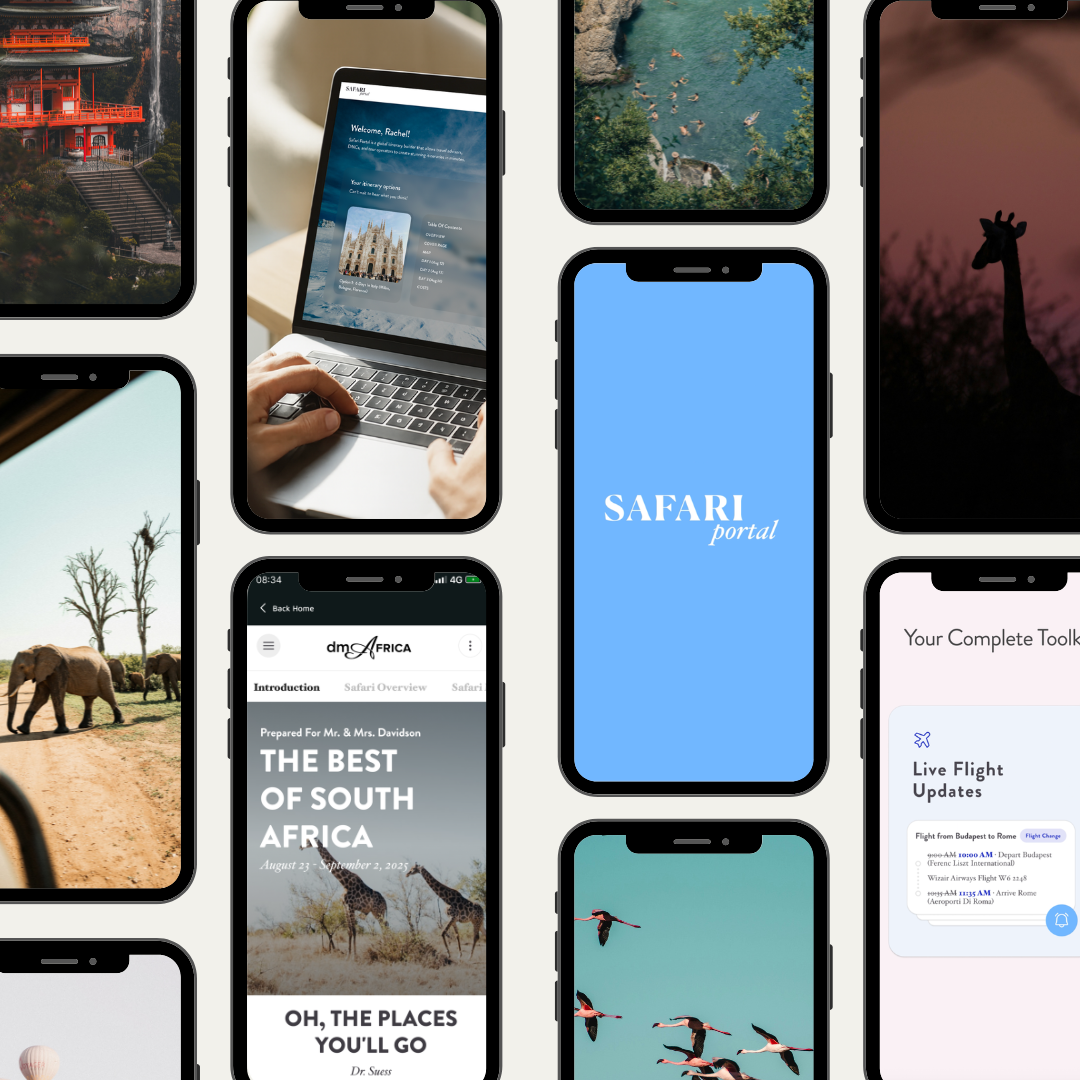
Safari Portal helps travel sellers build standout itineraries and proposals quickly, while keeping key commercial workflows in one place, from payments and pipeline to tasks, contacts and forms.
It also brings a content library and reusable building blocks into the process, so teams can stop reinventing the wheel every time a new enquiry lands.
Our brief was to own paid and content, and turn social into a consistent source of demo bookings from the right kind of travel business. We approached it like an editorial product launch, not a SaaS campaign: lead with the problems travel sellers recognise instantly, show the product doing one thing brilliantly, then keep showing up until booking a demo feels like the natural next step.
The brief
Safari Portal needed social to do two jobs at once:
First, attract travel professionals who would genuinely benefit from the product, not just anyone who clicks.
Second, build enough trust and familiarity that “book a demo” becomes the obvious next step.
The commercial logic was clear. Once someone takes a demo, conversion is strong. The goal was to create a pipeline of the right demo requests, not just awareness for awareness’ sake.
Our approach
B2B intent, delivered in B2C moments
Rather than defaulting to LinkedIn only, we leaned into Meta early. The thinking: travel sellers scroll outside working hours too, and they are often most open to changing tools when they are feeling inspired, reflective, or frustrated by the admin they have waiting for them next day.
So we treated paid social as a discovery channel first, then a nurturing channel second. Proof led creative, with an editorial feel
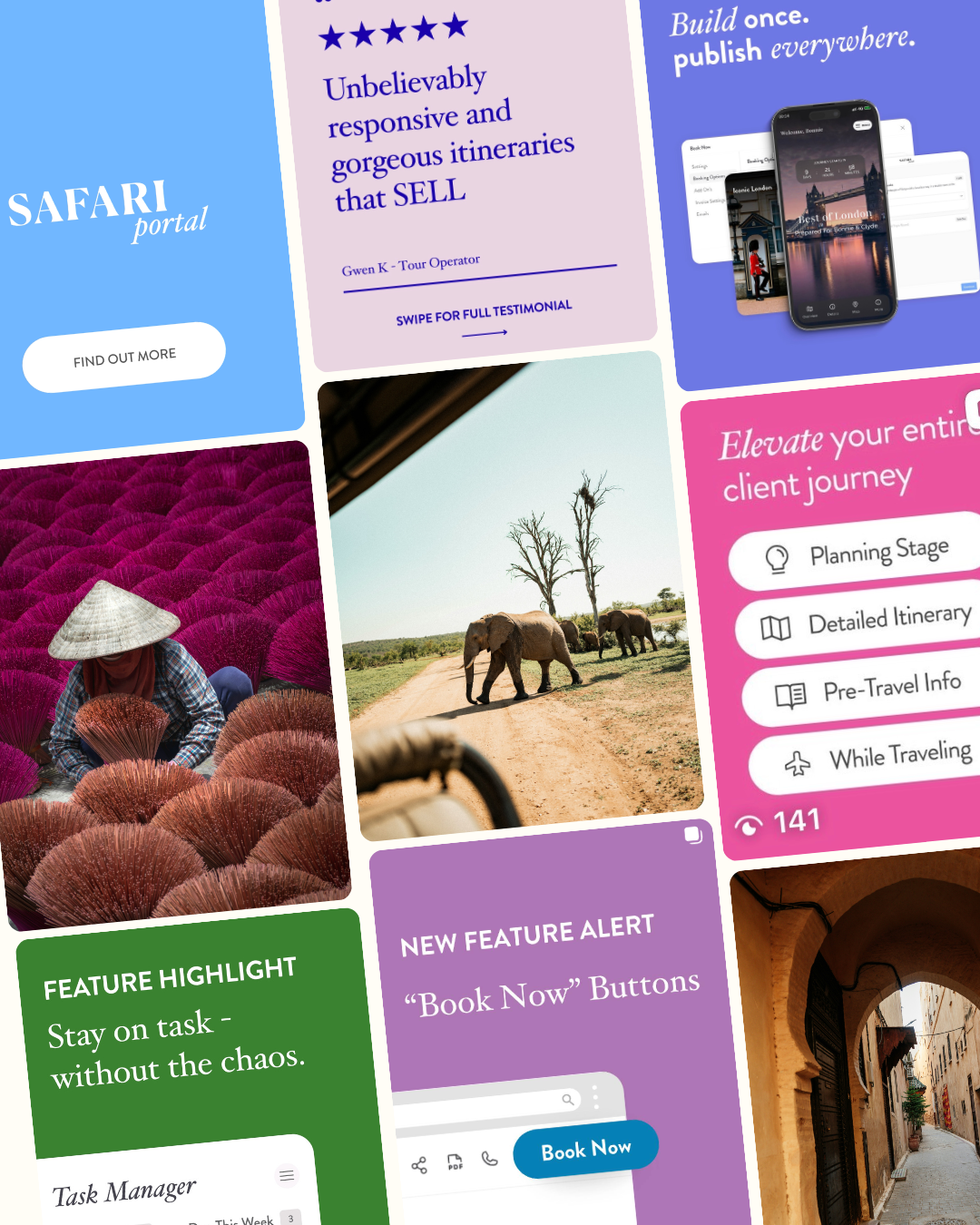
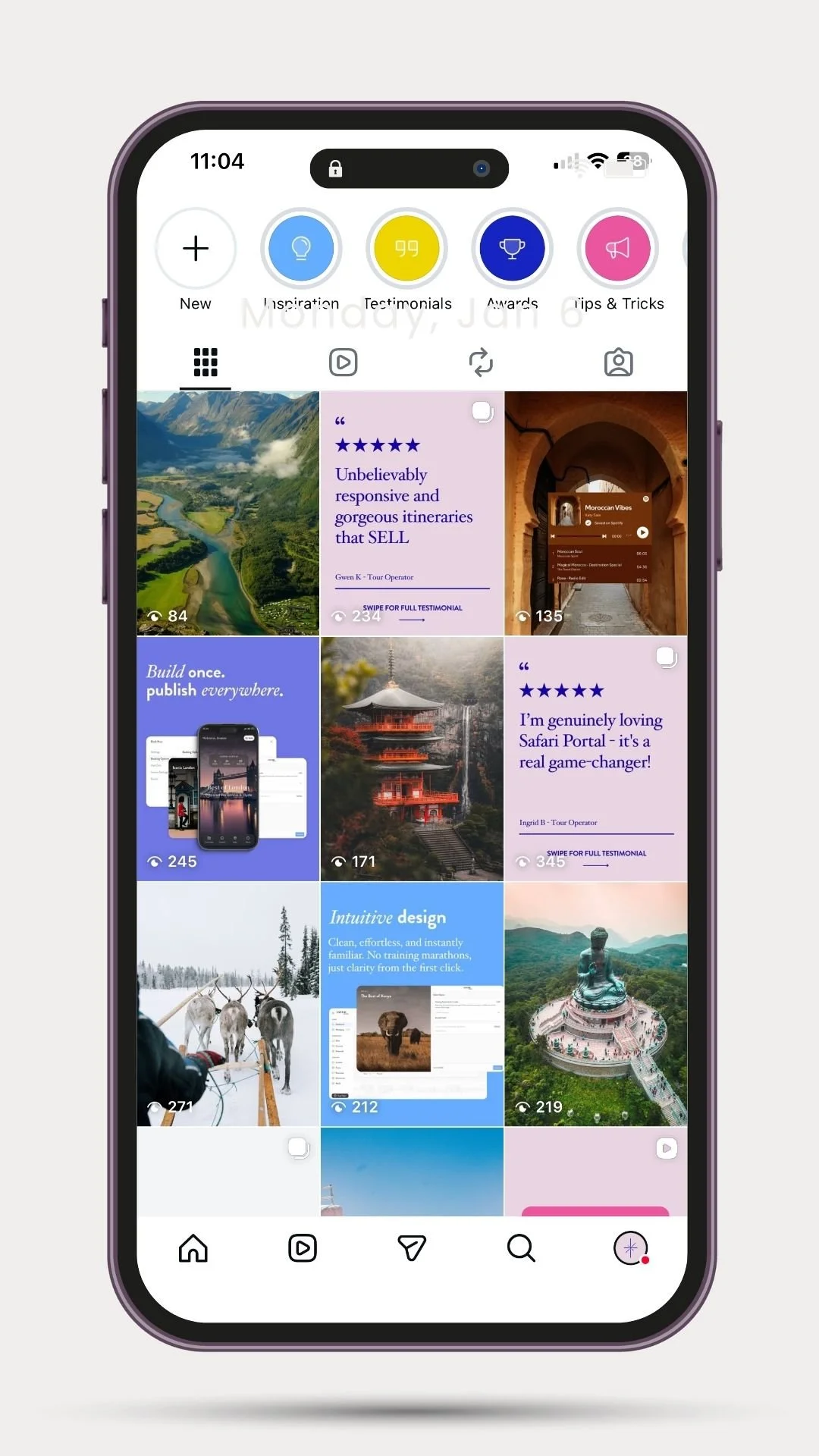
We took an editorial approach to content, anchored in real outcomes and real friction points. The creative was designed to feel useful, not salesy. When it worked, it did not look like an advert, it looked like proof.
Two routes did most of the heavy lifting:
Testimonial led creative that puts the advisor first.
Specific outcomes, in an advisor’s voice, landing fast. Time saved. Cleaner itineraries. Fewer revisions.
The kind of lines that stop the scroll because they are recognisable and concrete.
Product in motion, built around one job.
Short form edits that show Safari Portal doing a single task brilliantly in the opening seconds.
When videos tried to prove everything at once, performance dropped. When they dramatised one “wow” moment in the builder, interest climbed.
Building the system
We simplified the account structure and let the learning compound.
That meant tightening prospecting to the regions showing the strongest response, sequencing proof led creative to warm audiences, and keeping the conversion end of the funnel clean so demo intent was never diluted.
We also tested optimisation paths without over tuning. Some choices take time to reveal themselves in B2B, especially when your strongest outcomes are assisted, not just last click.
What we achieved, without relying
on last click
Across the engagement and lead journey, paid social became a consistent driver of qualified demand.
The strongest signal was not just direct demo actions, it was assisted conversions. People saw the ads, returned later, revisited the site, and converted through other channels after building familiarity. That is exactly how B2B discovery often works, and it is why social is so often the glue that holds the journey together.
Alongside lead impact, we also tracked share of voice against key competitors, with visibility rising as cadence increased and proof led creative earned engagement rather than renting it.
More projects
-
![]()
Bagels & Brews | Brand Creation
-
![]()
Poolside Bar | Brand Development
-
![]()
Clarabell's Restaurant | Collateral Design
-
![Hotel Marketing Agency]()
Hotel | Email Marketing